Epic MyChart Redesign
2026
Reimagining patient experience in healthcare
High impact feature enhancements for Epic MyChart redesign
Problem area
Patients have data, not clarity
On my phone sits an app used by 3,500+ hospitals across the U.S., touching the lives of millions of patients every year. Yet every time I open it, the experience feels frozen in time with dense layouts, unclear language, and workflows that assume patients already understand the healthcare system.
In a society where thoughtful design shapes how we bank, travel, and communicate, healthcare remains one of the most outdated digital experiences, despite being one of the most critical.
This case study explores a redesign of MyChart through a simple belief: Design has the power to improve lives, especially in healthcare, where clarity and trust matter most.
Current state of Epic MyChart
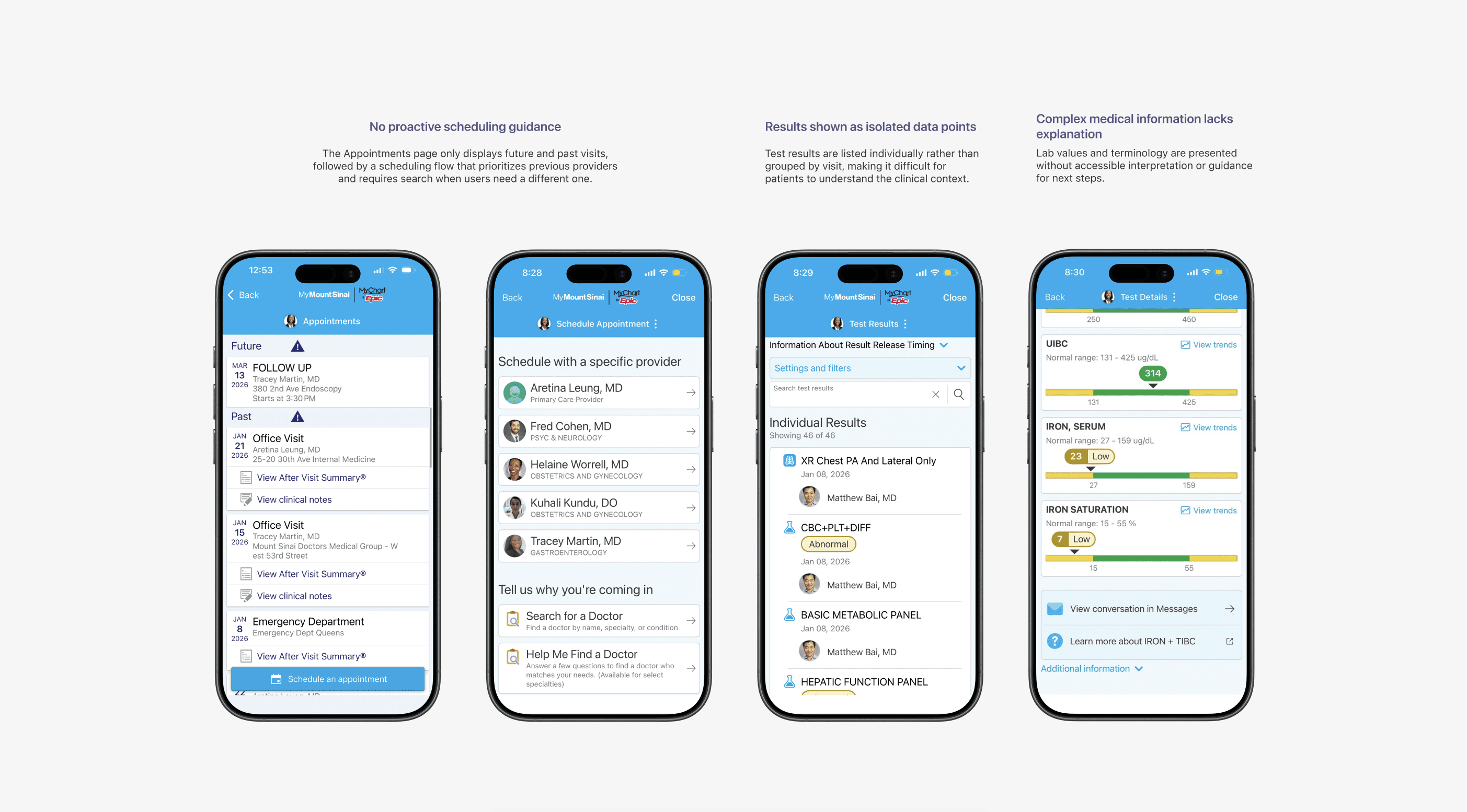
Problem Statement
While Epic MyChart functions as a reliable medical record system, it fails to guide patients through understanding their health, resulting in reactive usage, confusion around results, and missed opportunities for proactive care.
Research Synthesis
Translating research into redesign priorities
Exploratory interviews with three existing users and two clinicians were synthesized through affinity mapping, surfacing four themes that shaped the redesign: scheduling required clearer guidance, test results needed stronger visit-based context, patients needed more interpretive support, and trust depended on familiarity alongside carefully bounded AI assistance.
Core user insights
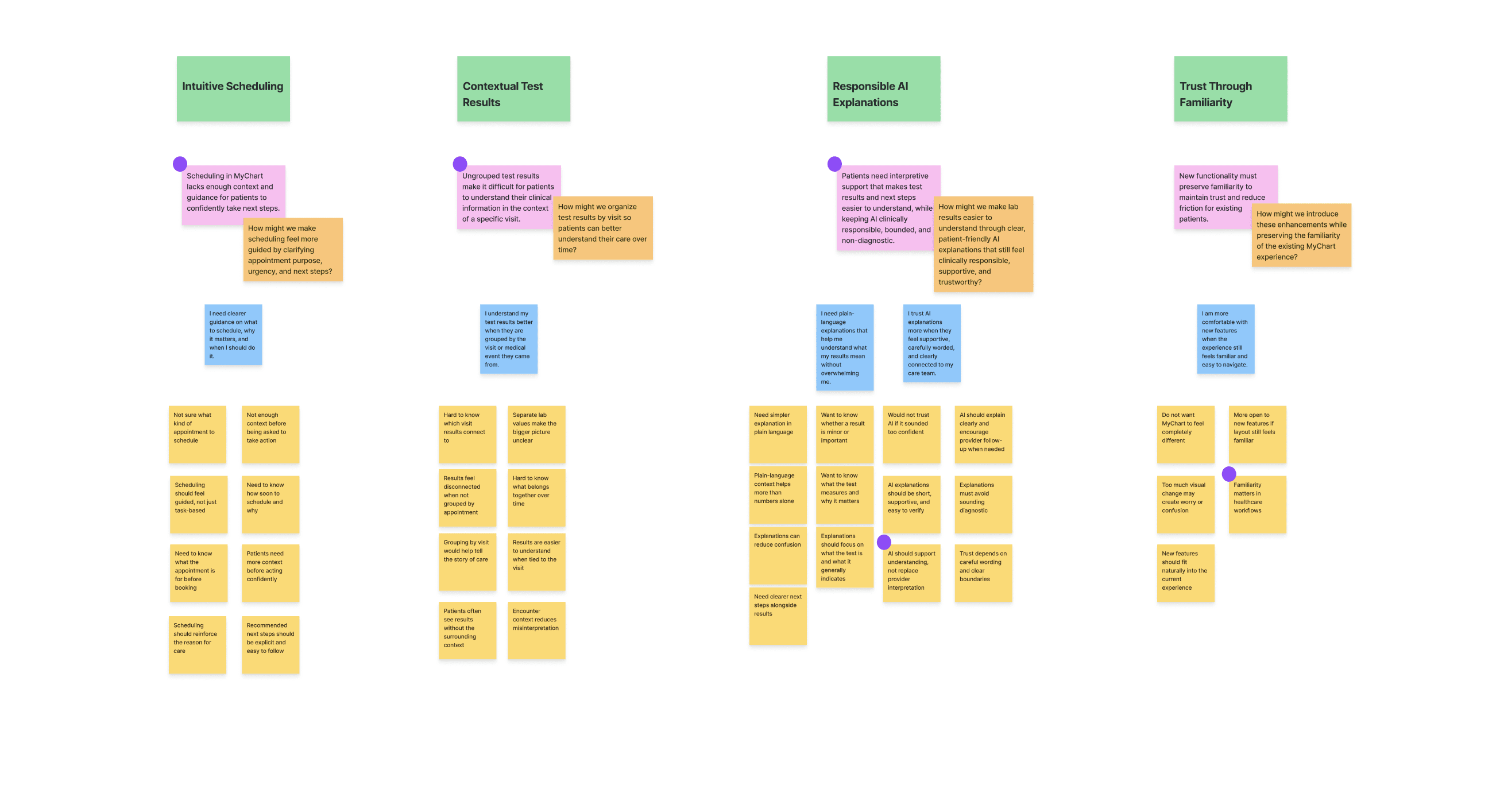
View more insights on FigJam
From research synthesis, three strategic opportunity areas emerged to guide where the redesign could create the most meaningful patient value.
Opportunity 1
How might we make scheduling feel more guided by clarifying appointment purpose, urgency, and next steps?
Opportunity 2
How might we organize test results by visit so patients can better understand their care over time?
Opportunity 3
How might we make lab results easier to understand through clear, patient-friendly AI explanations that still feel clinically responsible, supportive, and trustworthy?
Redesign goals
What I aimed to achieve
My approach to the Epic MyChart redesign was grounded in strategic restraint. Rather than overhauling the visual system, I preserved core brand colors, familiar flows, and key UI patterns to maintain trust and familiarity for existing patients. This created space to improve functionality and usability while respecting the product’s established identity.
The work was also shaped by intensive research with providers, which ensured design decisions were not only patient-centered, but technically and operationally feasible. Those conversations validated that the data required to support these feature enhancements already existed within Epic Hyperspace, making the solution credible within the realities of the provider ecosystem.
Design direction
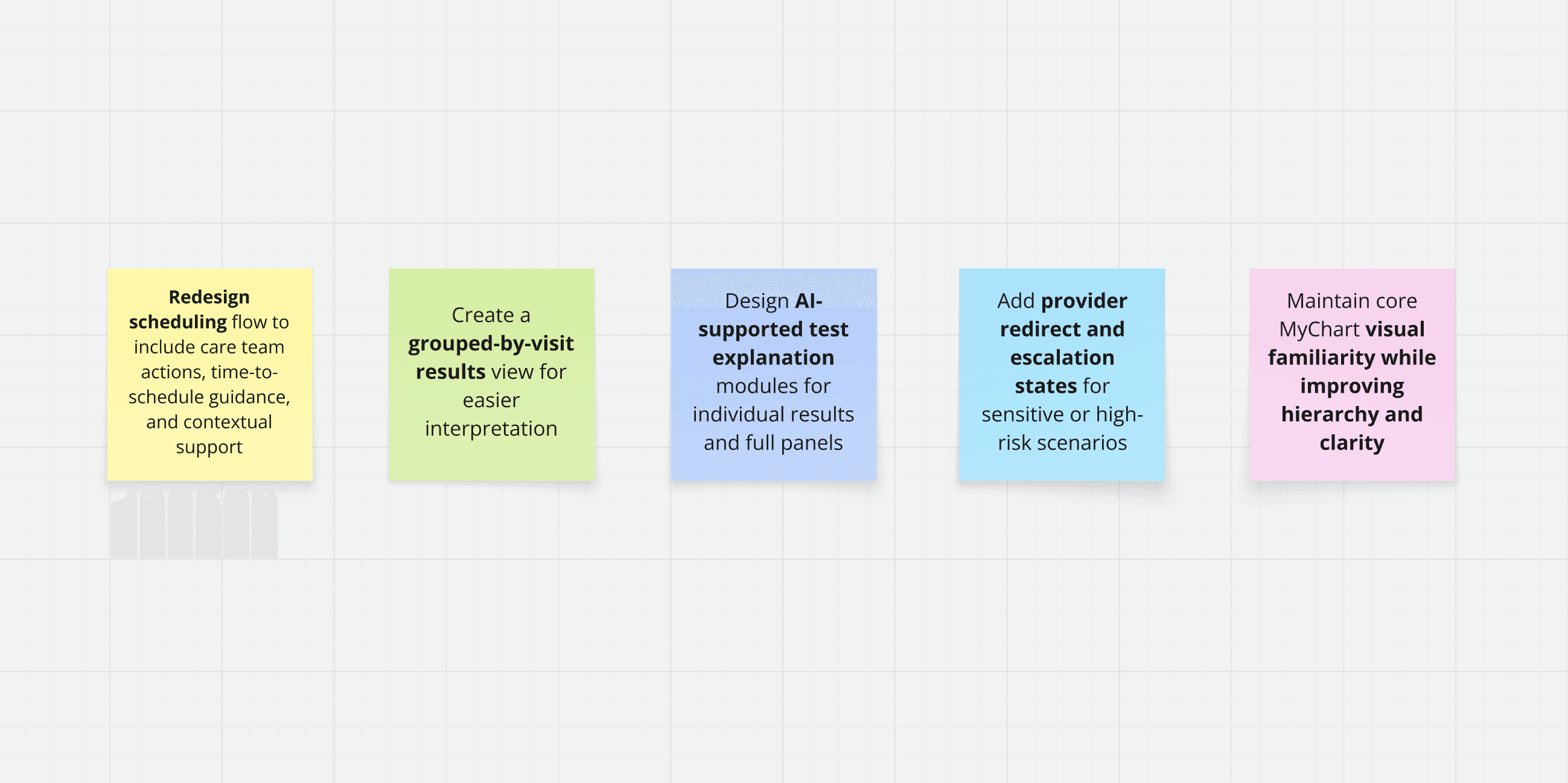
These three feature enhancements serve as the primary redesign priorities moving forward.
Contextual Test Results (by visits)
Organized test results by clinical visit to understand results within the context of care.
Responsible AI Explanations
Integrated responsible AI to translate complex medical data into clear explanations using internal clinical data.
Redesign decision 01 - Intuitive Appointment Scheduling
Intuitive scheduling for healthcare visits
The appointments experience was redesigned around context aware scheduling, surfacing the most relevant care actions based on provider requests, recent visits, demographic signals and historical care patterns, all within the patient’s existing provider network. Rather than presenting scheduling as a flat list of options, the experience guides patients toward the care most relevant to them in that moment.
The design uses progressive disclosure and a clear hierarchy so recommendations feel helpful, not overly directive. Upcoming visits are prioritized first, followed by provider requested care, system recommendations, history based suggestions and past appointments. This structure reduces cognitive load while helping patients quickly understand what needs attention now versus what can wait.
Before and After redesign - Appointments page
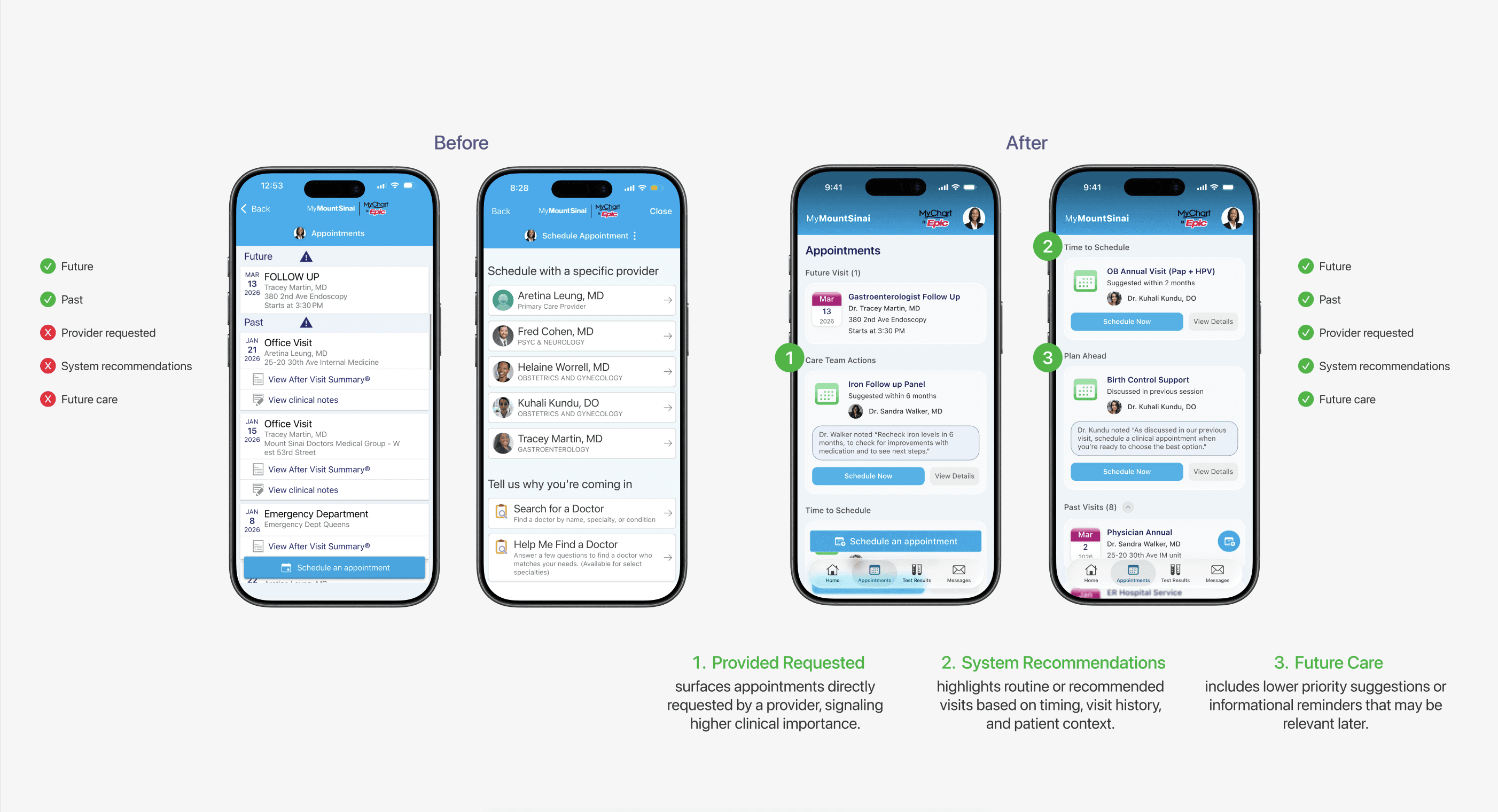
Reimagining the appointments experience
Patients can easily schedule suggested appointments with the appropriate provider, within the recommended timeframe.
Core Insight
Scheduling should not be a search problem, it should be a guided action based on patient context.
Redesign decision 02 - Contextual Test Results
Reducing cognitive load in test results
When patients open their lab results, they are often presented with a long list of disconnected tests. While clinically accurate, this structure reflects how data is stored in hospital systems, not how patients understand their care.
Lab results today are presented as a flat, chronological list, forcing patients to: reconstruct visits mentally, remember which tests were ordered together and manually compare results across time. This increases cognitive load and makes it difficult to understand health progress or regression.
Before and After redesign - Test results page
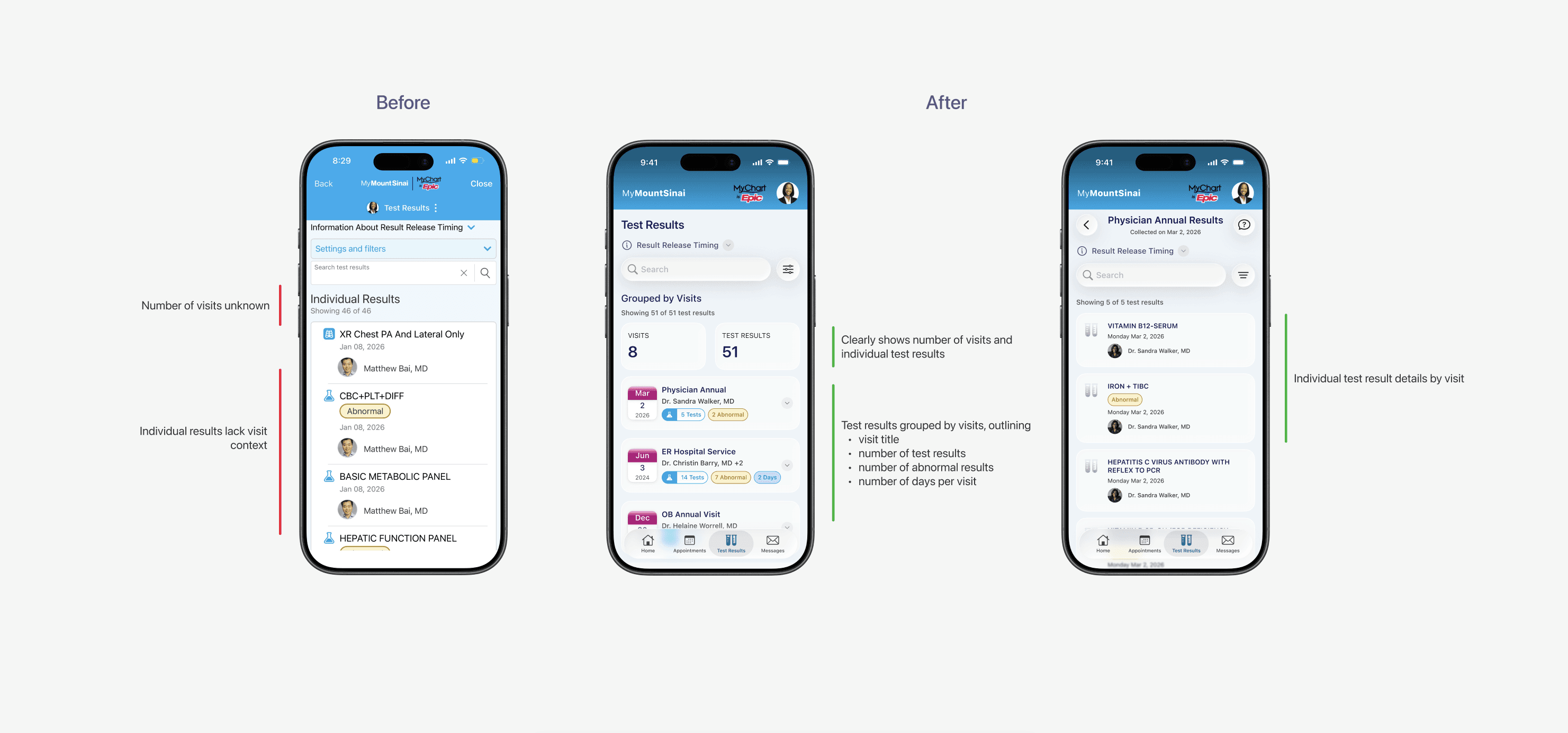
Overall outcome
Restores clinical context
Groups test results by the visit they were ordered
Simplified result scanning
Reduces information scanning and mental effort
Meaningful test context
Easier to understand why tests were ordered and their meaning
Restoring context to test results
Group test results by healthcare visits to restore clinical context.
Core Insight
Patients don’t think about their health in isolated test results, they think about it in the context of doctor visits and care events.
Redesign decision 03 - Responsible AI Explanations
Introducing responsible AI in patient portals
Healthcare portals are effective at delivering patient data, but not always patient understanding. In moments like lab result review, patients are often left alone to interpret raw clinical values before they’ve had a chance to speak with their doctor.
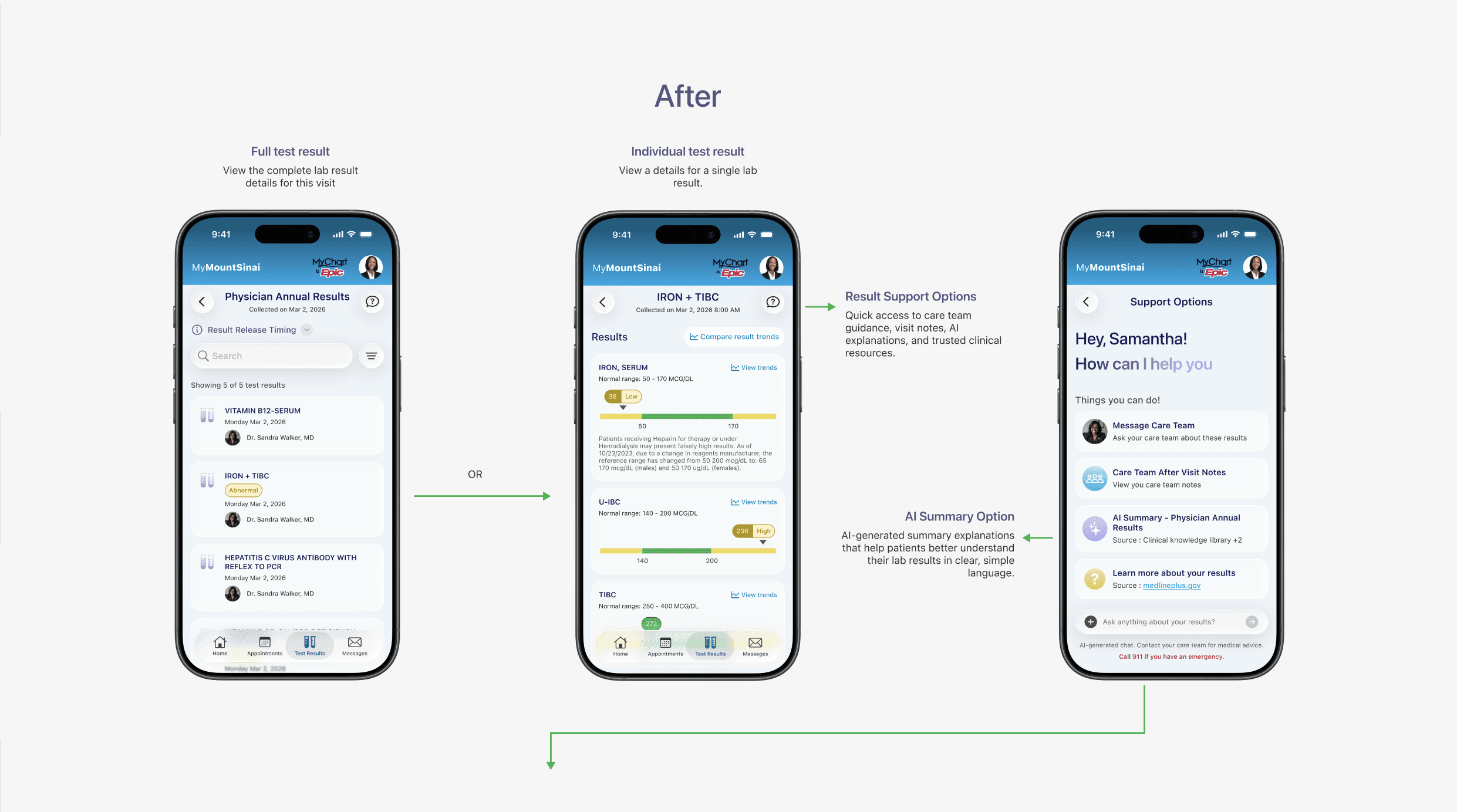
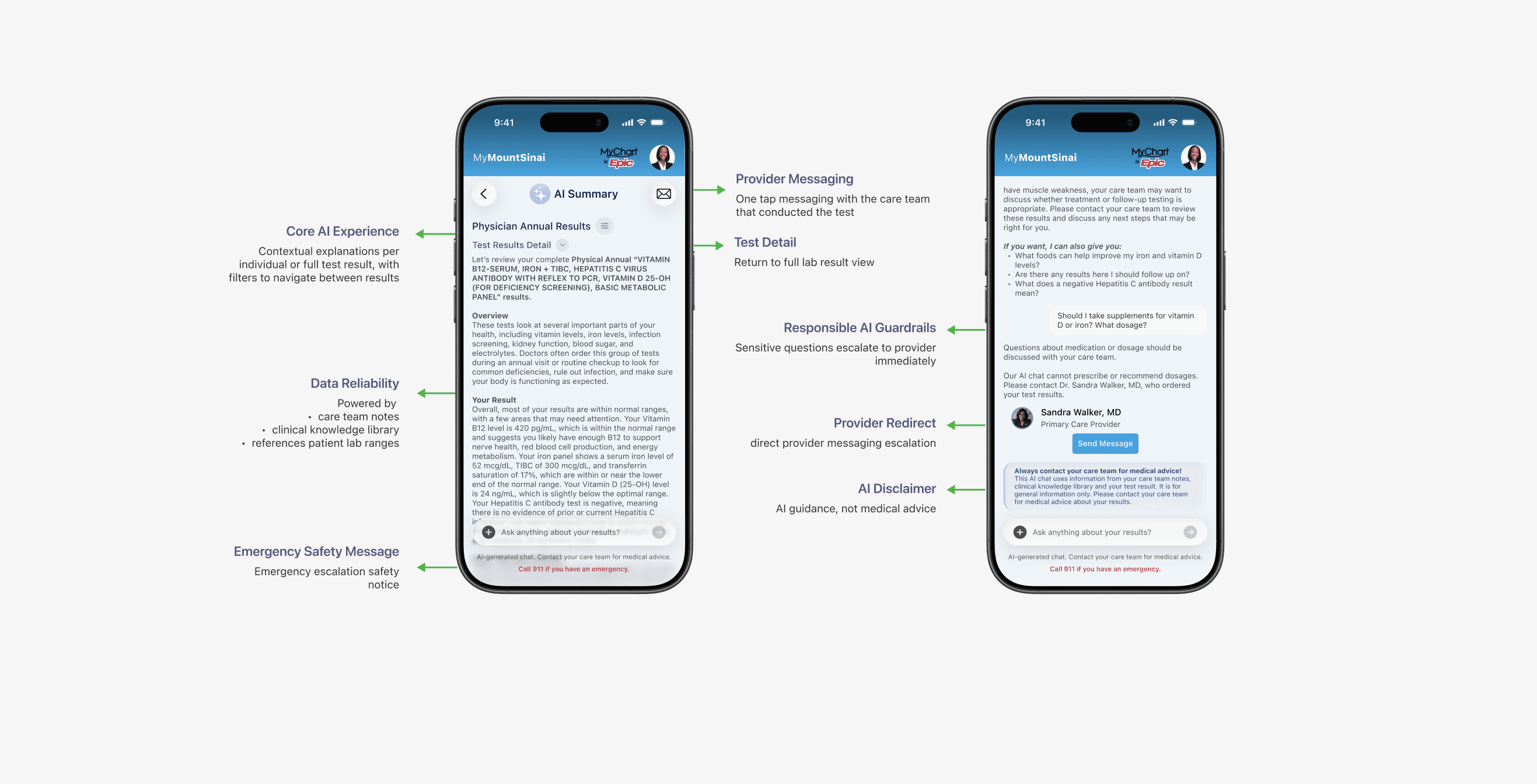
This redesign explores how responsible AI can bridge that gap by turning test results into clear, contextual explanations without crossing into medical decision making. Responsible AI guardrails ensure sensitive questions escalate to a provider immediately, while provider redirect enables direct provider messaging escalation when clinical judgment or follow-up is needed.
The experience offers structured AI summaries for either an individual result or an entire test panel, grounded in three trusted sources: care team notes, clinical knowledge library (U.S. National Library of Medicine) and the patient’s own results with reference ranges. By designing the system to be contextual, constrained and clinically grounded, the solution shows that responsible AI in healthcare is fundamentally a product design challenge, not just a model challenge.
Before and After AI design implementation
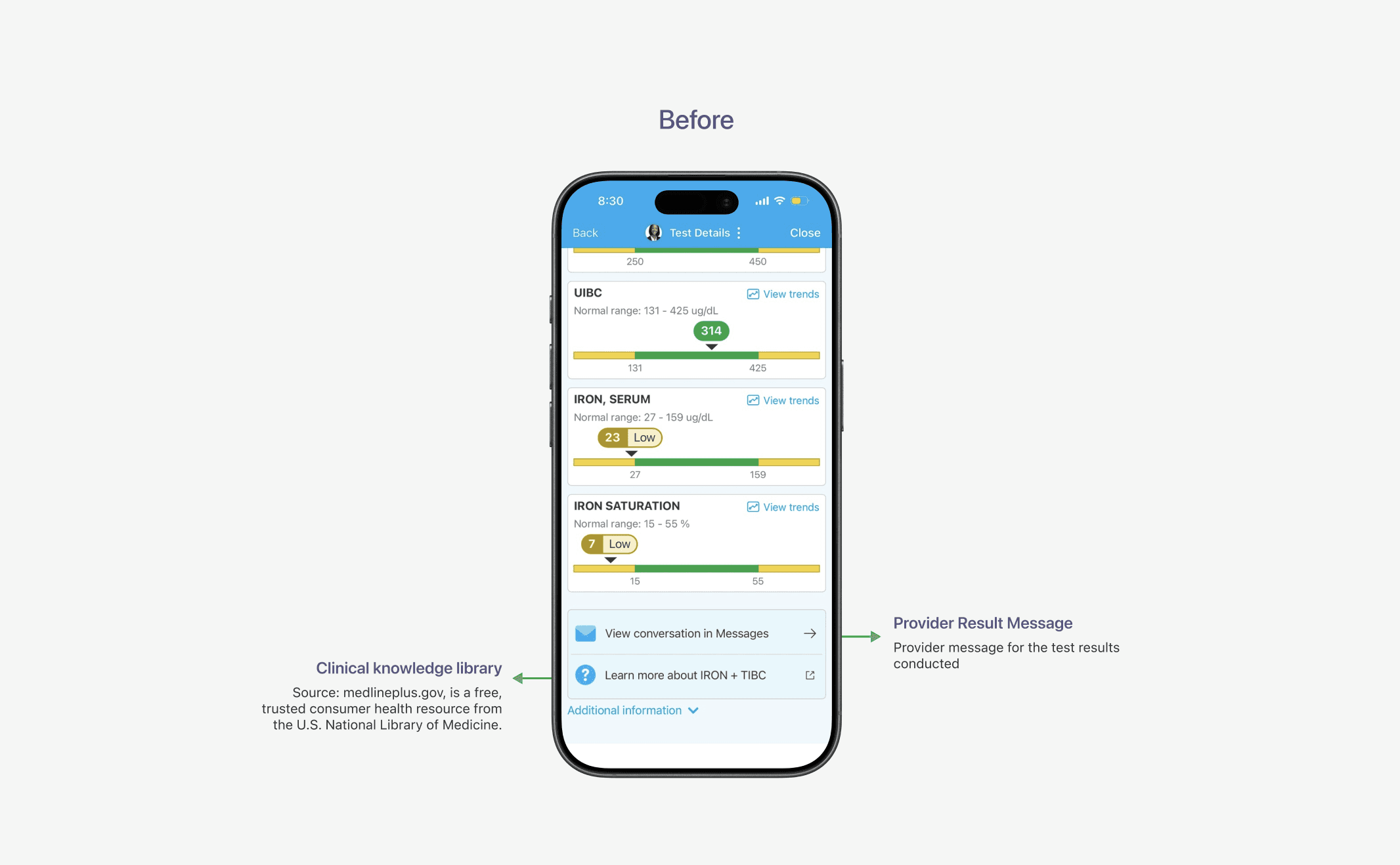
Now, introducing a contextual responsible AI chat powered by provider notes, trusted clinical knowledge (medlineplus.gov) and the patient’s test results [displayed above], resulting in the redesign below:
Primary objectives
Reduce comprehension barrier
Results are presented in medical language that is difficult for non-clinicians to interpret.
Personalize patient explanation
Patients often rely on external sources (medlineplus.gov/) that cannot interpret their specific results.
Support tool for providers
Provide care teams with tools to efficiently share meaningful insights without manually explaining every result.
Responsible AI integrated into test results
Integrated responsible AI to translate complex medical data into clear explanations using provider notes, hospital knowledge sources, and the patient’s actual test results.
Core Insight
Patients often see their lab results before speaking with their doctor, leaving them alone to interpret complex medical information.
Testing
How usability testing shaped the final design
Refined Through Testing
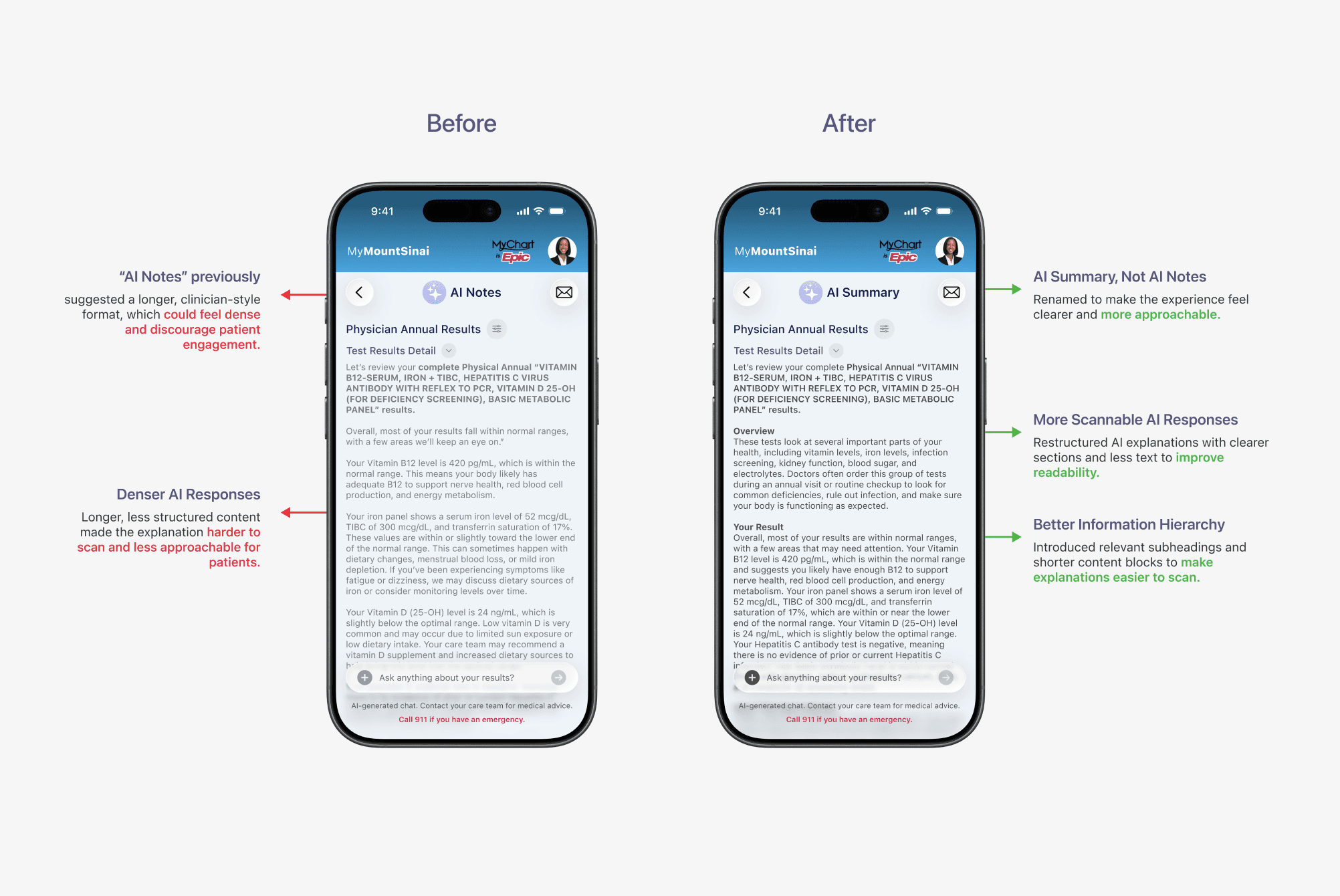
Validation through usability testing directly informed the final Epic MyChart iterations. One of the most valuable sessions came from clinician feedback, which helped sharpen both the framing and structure of the AI explanation experience. Based on that input, I evolved “AI Notes” into “AI Summary” to better align with patient expectations and reduce ambiguity, while restructuring the content to be more concise, clearly organized, and easier to scan. These refinements strengthened readability, improved approachability, and ensured the experience felt more clinically appropriate and strategically aligned with how patients interpret sensitive health information.
Final Refinements
Retrospective
Designing a smarter MyChart
From Medical Records to Meaningful Guidance
This redesign doesn’t aim to reinvent Epic MyChart or disrupt clinical workflows. Instead, it focuses on reducing unnecessary cognitive burden by clarifying what matters now, helping patients understand their health progress over time, and guiding care decisions without overwhelming them. Through visit based lab organization, intuitive scheduling, and responsibly integrated AI explanations, the experience shifts MyChart from a static repository of medical records into a system that actively supports understanding, confidence, and trust in everyday healthcare decisions.
While this project was an independent redesign concept rather than work produced at Epic, it was informed by research and testing with doctors, current users and designers to ground the work in real needs, practical constraints and meaningful feedback.
Potential Impact
“This would be a valuable improvement. The redesign could help streamline how patients use Epic MyChart and encourages them to take a more active role in managing their health.”

Dr. Donclair Brown
Cardiologist

