Fova
2025
Launching in May
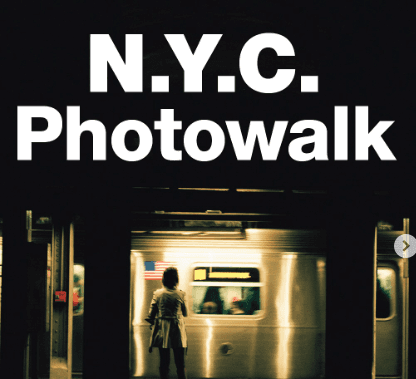
Reimagining NYC photowalks into a seamless platform
NYC hosts hundreds of photowalks year round, organized by independent creators and large meetup groups across multiple platforms. While interest is high, the end-to-end experience of finding a walk, coordinating logistics and engaging with the community is fragmented.
This project explored how a unified product could reduce friction and turn photowalk participation into a repeatable social habit rather than a one off event.
Fova replaced a fragmented ecosystem of Meetup, Instagram and WhatsApp with a unified platform for hosting, scheduling, tracking and communicating NYC photowalk events.
Problem area
When planning friction became an attendance problem
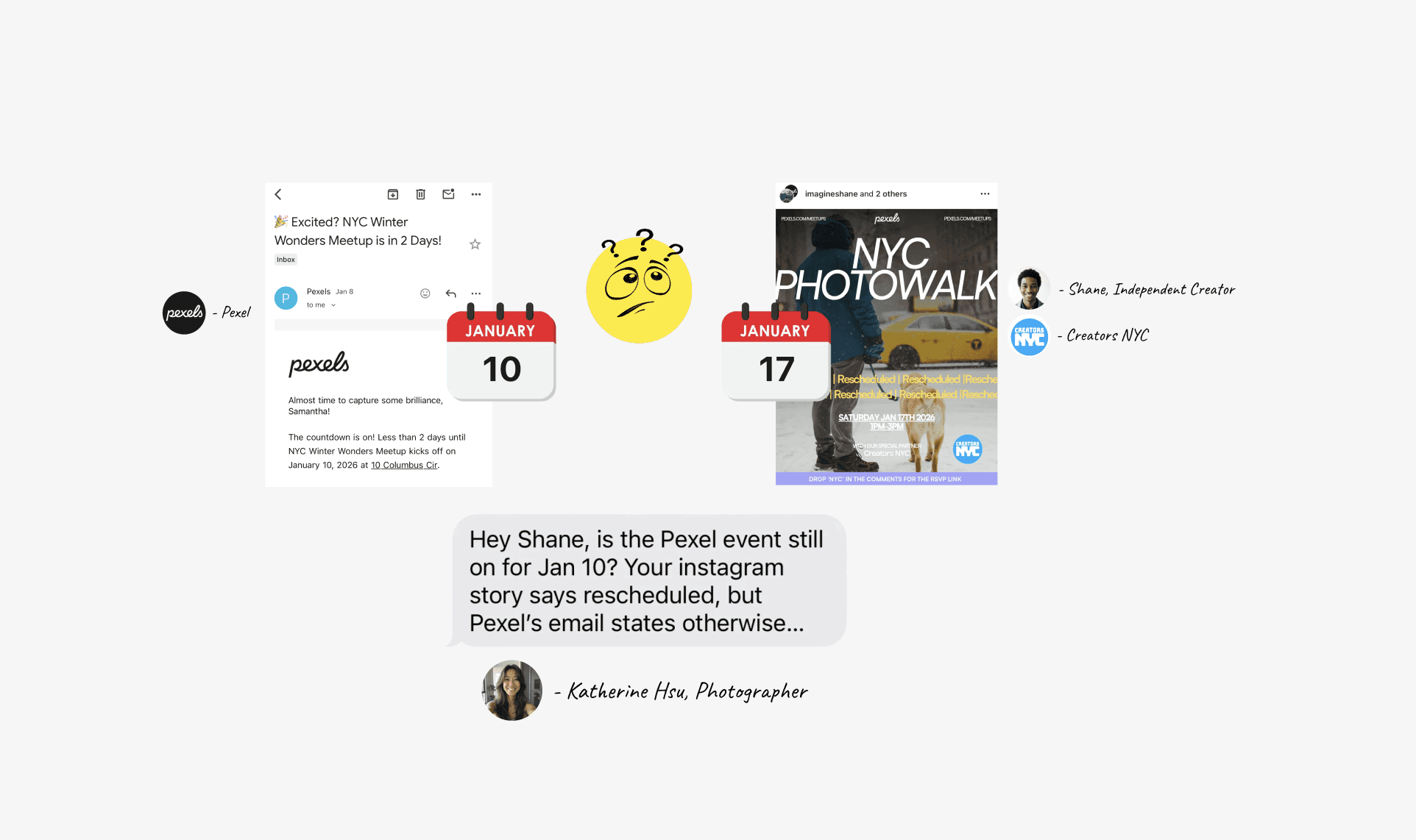
Photowalk communities relied on multiple platforms to manage events, creating friction in RSVPs and host attendee communication. Without a single source of truth, attendees received inconsistent information, leading to confusion and missed events. This resulted in declining attendance, increased host coordination overhead and erosion of trust between organizers and participants.
Problem Statement
Despite NYC’s vibrant photowalk culture, photographers faced unnecessary friction moving from interest to attendance because discovery, scheduling, and communication lived across disconnected platforms.
Design Goals
Scheduling
Plan smarter with organized dates, RSVPs and instant calendar integration
Communication
Streamline communication between hosts and attendees effortlessly
Design decision 01 - Discovery
Unify event discovery into a single source of truth
Photographers were losing momentum before they ever RSVP’d. Events lived across Instagram, WhatsApp, generic meetup tools, and word of mouth, forcing users to piece together dates, locations and host credibility. This delayed discovery, increasing cognitive load and reduced follow through.
Centralizing NYC photowalks into a single structured discovery feed reduced ambiguity and shortened decision time, rebuilding confidence to commit. Existing platforms like Meetup, Luma, and Instagram optimized for broad events, not niche recurring photowalk communities. This revealed a clear opportunity to design for trust, clarity and repeat engagement.
Clear discovery, Trusted participation
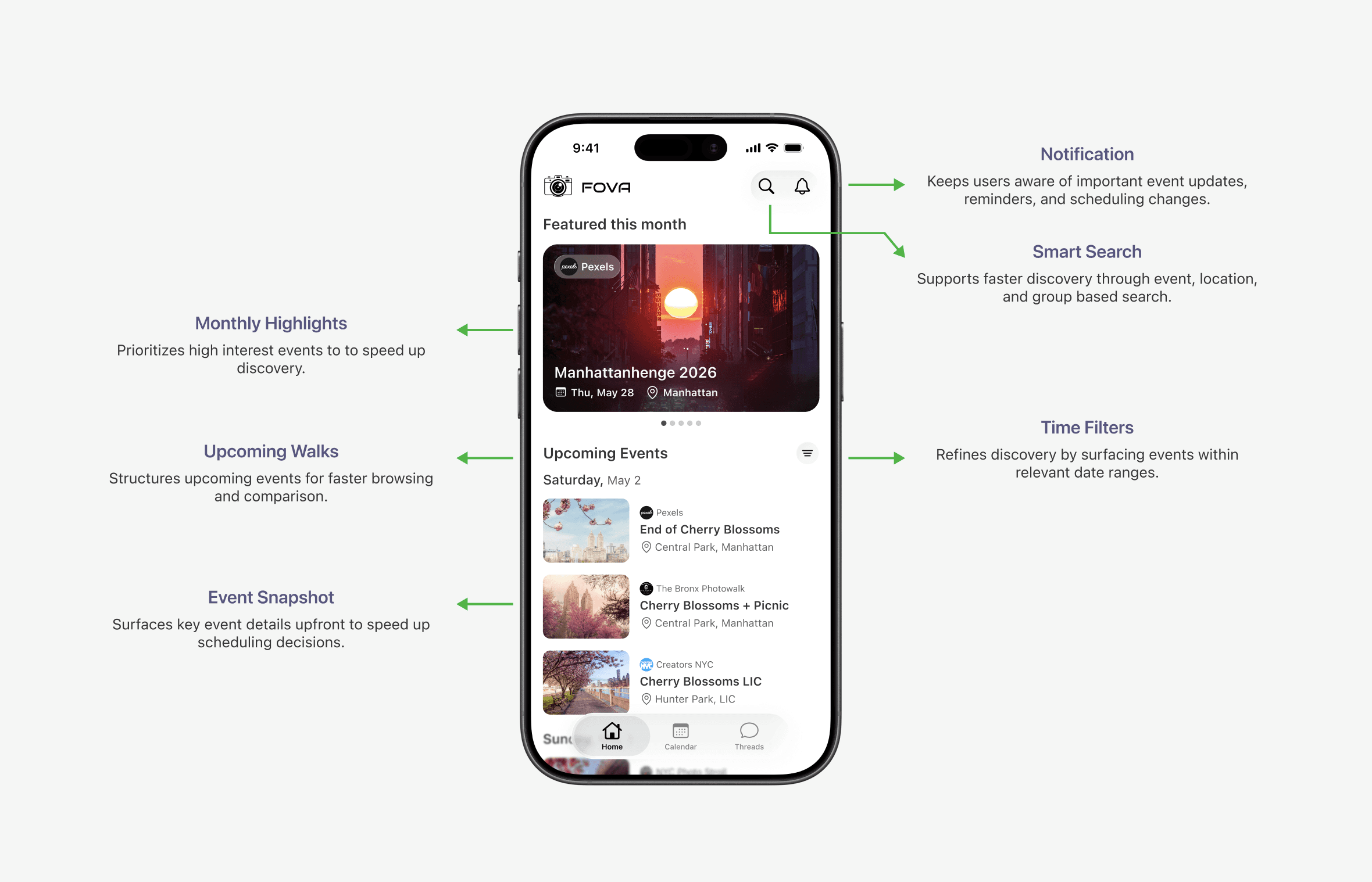
Building Trust into Discovery
Created a centralized discovery experience that replaced fragmented social coordination with one reliable place to browse upcoming photowalks.
Key insight
Discovery breaks down when trust, timing, and logistics are fragmented across platforms.
Design decision 02 - Scheduling
Make scheduling commitments explicit and low friction
Users were interested in attending photowalks, but unclear timing, weak reminders and ambiguous attendance norms led to tentative “I’ll see” behavior and last minute drop offs. By designing scheduling that was clear yet flexible, I reduced friction, rebuilt trust and increased confident RSVPs.
Decision signals consistently pointed to uncertainty as the primary blocker around date clarity, overlapping events, forgetfulness and who would actually show up. Making schedules explicit, integrating calendars and surfacing attendance signals directly addressed these concerns and shifted behavior from hesitation to commitment.
Designing explicit scheduling signals
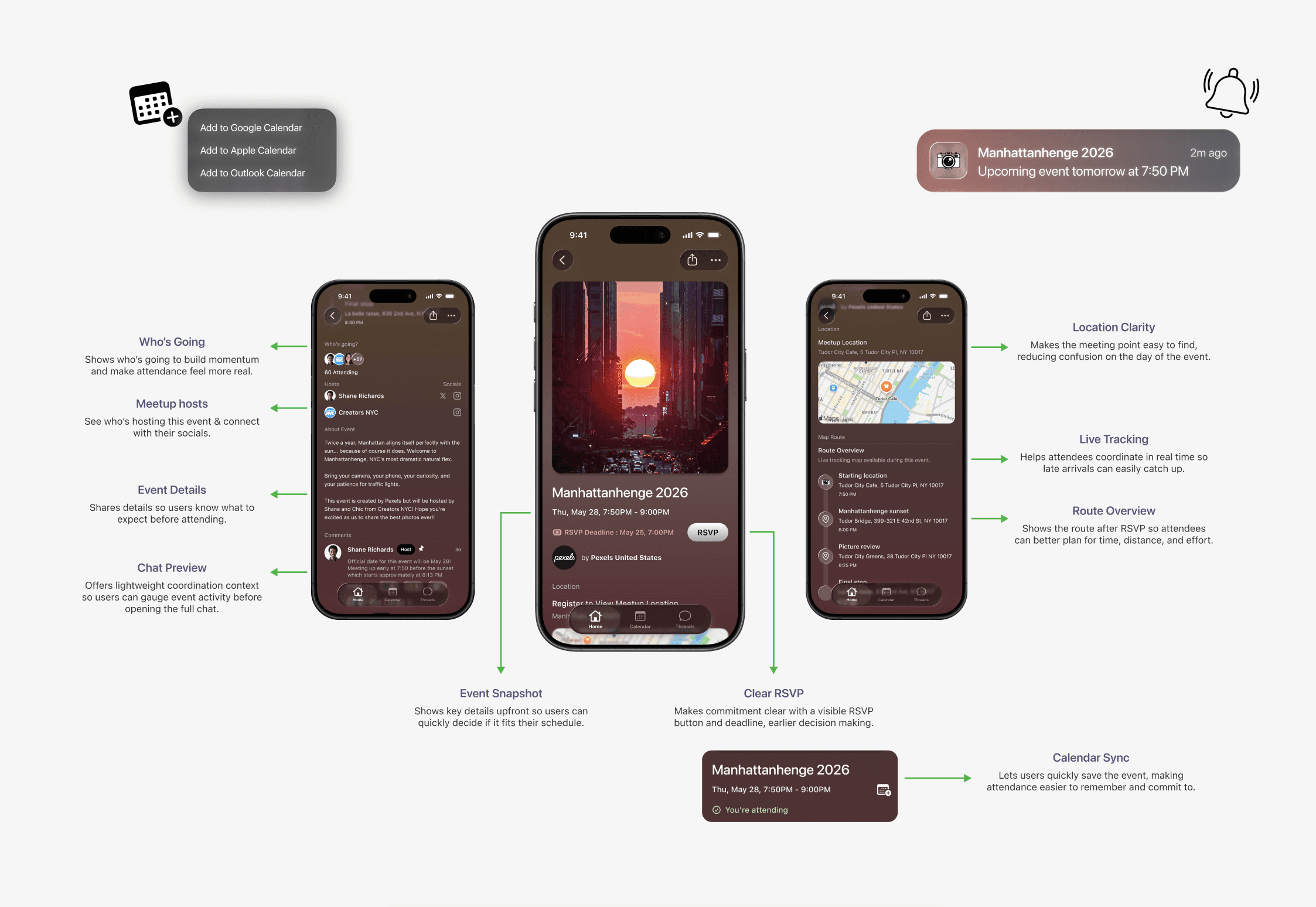
From “I’ll See” to RSVP
Addressed vague commitment behavior by making event timing, attendance norms, and reminders more visible and actionable.
Key insight
“If I have to DM someone just to confirm the details, I usually don’t go.” - Luis Yunda
Design decision 03 - Communication
Streamline communication between hosts and attendees effortlessly
Communication wasn’t broken, it was misplaced. Critical updates were buried in noisy chats, causing missed information and weak group cohesion. I structured communication around the event lifecycle to surface the right message at the right moment: before, during and after the photowalk.
Signals consistently showed that users think in event phases, not individual message threads and struggled to retrieve essential details when they mattered most. Aligning communication to these phases improved clarity, confidence and participation without increasing noise.
Contextual communication
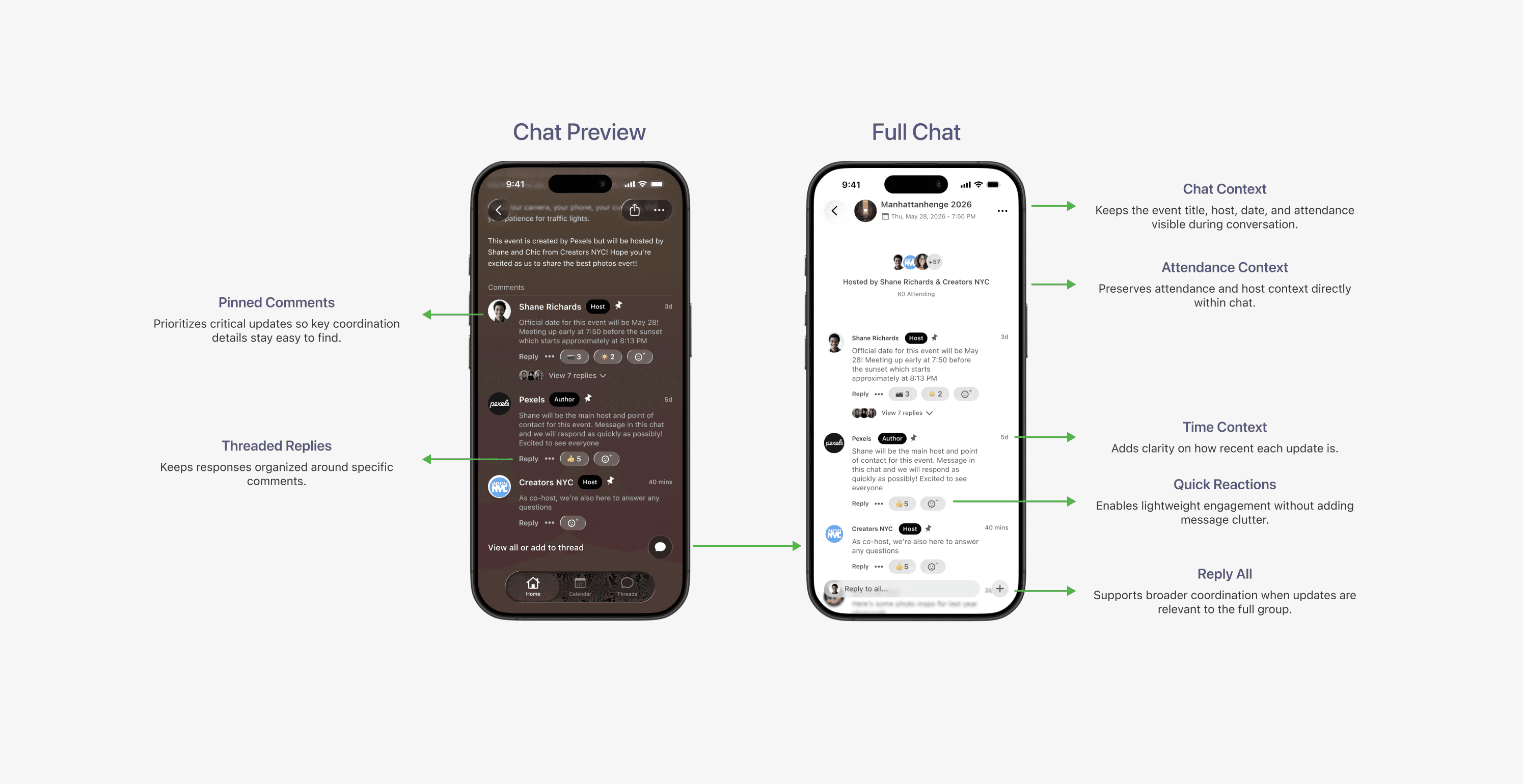
From Noise to Coordination
Reduced missed updates by aligning communication to the event lifecycle instead of forcing users to scan fragmented chat threads.
Key insight
Users don’t want more messages… they want timely, relevant ones.
Retrospective
Expected Product Impact
Currently in development, targeting a launch in 2026. This solution has the potential to unify inspiration, scheduling and communication into one cohesive system, transforming photowalk participation from fragmented coordination into a more seamless social ritual. It is designed to reduce operational friction, deepen community trust, improve attendance and support more sustainable growth for creator led photowalk communities across NYC.
"The product has the potential to replace ambiguity with clear signals. I would finally be able to predict turnout and plan photowalks with confidence."
NYC Stan
Daniel, group founder
Confidentiality Disclaimer
Some details have been intentionally omitted for confidentiality of this application prior to release. I can discuss select decisions and the full research process during an interview presentation, including user interviews, synthesis, competitive analysis, usability testing, and a preview of the live beta experience.
The full case study will be published once the project is live.

